A dehumidifier is one of the most effective mold-prevention tools available to homeowners. But there's an important distinction between preventing mold and dealing with mold you already have. Getting that wrong leads to either false confidence or unnecessary expense.
Here's what the research actually says.
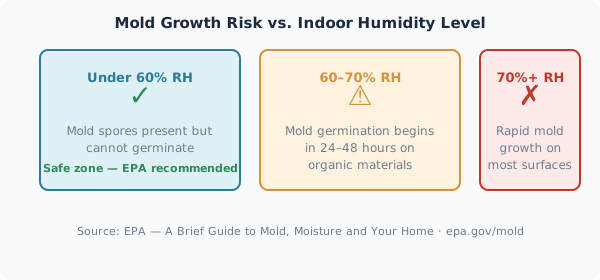
The Science Behind Mold and Humidity
Mold is everywhere, in the air of every home, in soil, on organic surfaces. Spores are essentially dormant seeds that wait for the right conditions to germinate. The most important condition is moisture.
The EPA states that keeping indoor relative humidity below 60% prevents mold germination on most organic materials. ASHRAE Standard 62.1 recommends staying below 65% RH for building materials. Mold researchers have found that germination time shortens dramatically as humidity rises: at 70% RH, mold can begin growing on wood or drywall in as little as 24–48 hours.
At 50% RH, the target most dehumidifier manufacturers recommend, mold cannot germinate. The spores remain dormant. You can't eliminate the spores themselves without professional air filtration, but you can deny them the moisture they need to become a problem.
What a Dehumidifier Can Do
Prevent new mold growth. This is the dehumidifier's primary value in mold-prone environments. A basement maintained at 50% RH year-round will not develop new mold on walls, wood framing, or stored items. This is why HVAC professionals routinely recommend a dehumidifier as a first-line defense in humid climates or below-grade spaces.
Slow or halt active mold spread. If you have a small active mold colony in your basement, say, a 1–2 sq ft patch on a wall, running a dehumidifier to drop humidity below 60% will slow or stop the spread. The existing mold won't die, but it stops expanding without the moisture it needs.
Protect stored belongings. Cardboard boxes, wood furniture, fabric, paper documents, all of these are vulnerable at high humidity. A basement dehumidifier protects everything stored there.
Reduce musty odors. The musty smell associated with basements is partially metabolic byproduct from mold and mildew activity. Lowering humidity reduces microbial activity and reduces the odor. Not instantly, but measurably over a few days to weeks.
What a Dehumidifier Cannot Do
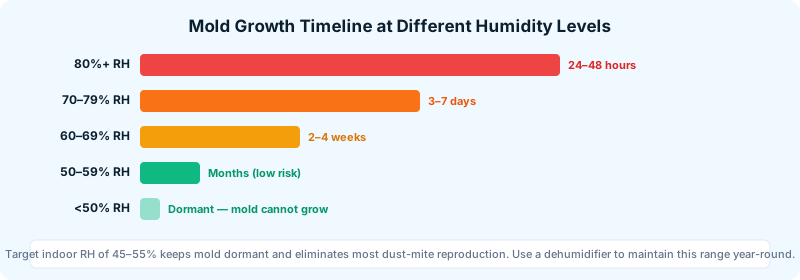
Kill existing mold. Running a dehumidifier does not kill established mold colonies. Mold in a dormant state (from dry conditions) retains viable spores. When conditions change, during a power outage, a leak, a period of high humidity, the colony can reactivate. Existing mold requires physical removal and treatment with appropriate biocides or encapsulants.
Remove mold spores from the air. A standard dehumidifier has a basic dust filter, not a HEPA filter. It won't meaningfully reduce airborne mold spore counts. If you have a significant mold problem and are concerned about air quality, a HEPA air purifier is a separate tool for that specific job.
Fix the source of water intrusion. If water is actively entering your basement through cracks, a failing sump pump, or poor drainage, a dehumidifier treats the symptom, not the cause. A 50-pint dehumidifier running 24/7 in a basement with active water intrusion will remove moisture, but the dehumidifier is working harder than it should and the underlying waterproofing issue needs addressing. Always fix the source first.
Active Mold: What to Do Before Running a Dehumidifier
If you have visible mold covering more than 10 sq ft, the EPA recommends professional remediation rather than DIY cleanup. For smaller areas (under 10 sq ft), DIY remediation is generally manageable:
1. Identify and fix the moisture source. No amount of dehumidification will help if water is actively entering or if there's a plumbing leak feeding the mold.
2. Clean or remove affected materials. Mold on non-porous surfaces (concrete, tile) can be cleaned with a 1:10 bleach solution. Porous materials (drywall, wood, carpet) with significant mold growth often need to be removed and replaced, the mold has grown into the material.
3. Then run the dehumidifier. Once the source is fixed and affected materials are addressed, start the dehumidifier. This maintains the low-humidity conditions that prevent recurrence.
Skipping step 1 or 2 and just running a dehumidifier is a common mistake. You're managing moisture without addressing the mold, which continues to exist on surfaces even in dry conditions.
Sizing Your Dehumidifier for Mold Prevention
For mold prevention to work, the dehumidifier needs to be the right size for the space. An undersized unit running at 100% duty cycle without reaching the 50% RH target doesn't prevent mold, it just moves in that direction without arriving.
The rule of thumb: a correctly sized unit should reach your target humidity (50% RH) and cycle on and off based on the humidistat. If your unit runs continuously without reaching 50%, it's undersized. Use our dehumidifier size calculator to verify your capacity needs.
Key factors that influence sizing for mold-prone spaces:
- Basement/crawl space: Apply the 1.2× or 1.3× room-type multiplier. These spaces have inherently higher moisture loads from surrounding soil
- Climate: Humid and very humid climates require proportionally more capacity
- Moisture condition: If you've had visible mold or active water entry, select "very damp" rather than "moderately damp" even if the space currently looks dry. The underlying moisture source may still be active
For crawl spaces specifically, see our crawl space dehumidifier sizing guide, which addresses the unique challenges of below-grade, un-air-conditioned spaces with exposed soil.
Humidity Targets for Mold Prevention
The strict mold-prevention target is below 60% RH. The practical recommended target is 45–50% RH, which:
- Provides a 10% buffer below the germination threshold
- Accounts for hygrometer measurement error (±3–5%)
- Handles temporary spikes (a dryer running, a shower, heavy rain)
- Suppresses dust mites as a bonus (they reproduce above 50% RH)
For more detail on what humidity setting to use and why the target matters, read our guide on what humidity level to set your dehumidifier.
How Long Before Results Show?
In a moderately damp basement where no visible mold is present but musty odor and elevated humidity exist:
- 24–48 hours: Humidity begins dropping noticeably
- 3–7 days: Humidity stabilizes near target if unit is correctly sized
- 2–4 weeks: Musty odor diminishes significantly as microbial activity slows
- 1–3 months: Concrete walls and floor dry out; efflorescence may reduce
Don't expect overnight results. The moisture absorbed into concrete walls and other structural materials takes time to release and be removed. Persistence matters more than any single high-performance day.
Running the unit year-round (or at least spring through fall in humid climates) provides continuous protection. A correctly sized ENERGY STAR unit in a moderate climate costs about $111/year to run, less than the cost of one mold remediation visit. Our dehumidifier energy cost guide breaks down the math in detail.